Software isn't enough. The body still needs help.
We are building the physical layer of behavior change, with IoT devices for safety today and wearable mobility exoskeletons tomorrow.
Software can remind. It cannot catch.
Software can guide a decision, coordinate a family, and carry cognitive load. It cannot break a fall, unlock a door from across the country, or lift a tired body up a flight of stairs.
The most important caregiving moments often happen in the physical world, and they happen at the worst possible times: three in the morning, alone, under stress. That is why hardware matters.
Devices for safety and daily living.
Our first hardware category is IoT devices that make ordinary days safer. Some of these we will build ourselves. Others we will curate and integrate through OneSelf's Bazaar.
Fall detection wearables
A device that understands a normal day and knows the difference between a stumble and a fall. Calls help when it matters.
Location-aware footwear
GPS-enabled shoes and soles for the wandering moments that define dementia caregiving. Peace of mind that lives on a map.
Smart locks and door sensors
Doors that know the difference between a caregiver leaving and a patient leaving.
Automatic medication dispensers
The medication question, answered once and for the rest of the week. Integrated directly into OneSelf reminders.
Auto stove shutoffs
The single most common home safety intervention for dementia households. Understated. Essential.
Orientation and memory aids
Talking photo frames, ambient signage, and gentle spoken cues, designed to reduce confusion without calling attention to it.
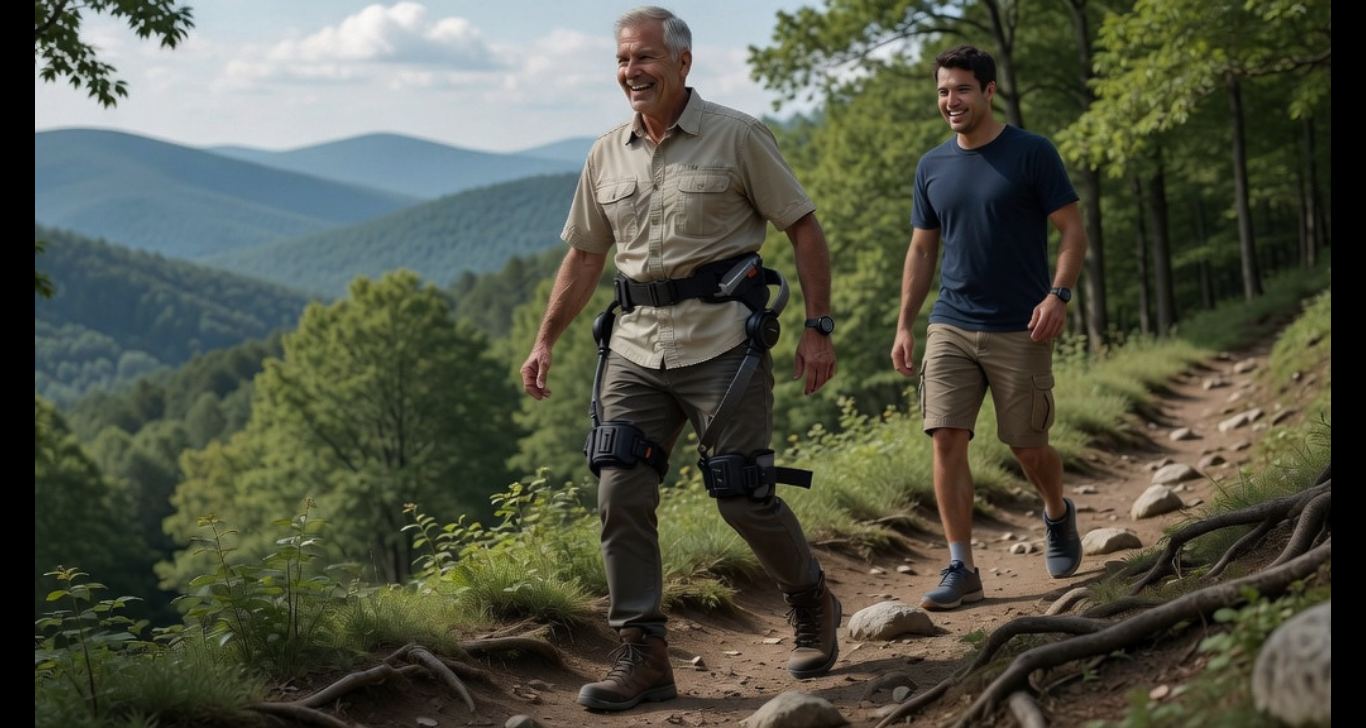
Wearable suits that help people keep walking.
What we are building
Two variants of a lightweight hip-worn mobility exoskeleton: a spring-assisted passive model for daily support, and a motorized model with AI-driven gait adaptation. Both are designed to be worn over everyday clothing.
Who it's for
Older adults who still want to climb their own stairs. People recovering from stroke. Anyone whose body has slowed down while their life has not.
Why now
Lightweight actuators, affordable sensors, and denser batteries have brought exoskeletons out of the clinical domain. Chinese manufacturers are already renting them to tourists on mountain hikes. The category is no longer a research question.
Our difference
We are designing the exoskeleton around a behavior change thesis. The device is judged not by its torque curves but by whether someone wears it to the grocery store twice a week, and keeps wearing it.
Where we are.
The IoT line is in active development and partnership sourcing. The spring-assisted exoskeleton is in prototype. The motorized variant is in research and design. We will say more when we have more to say.
We are looking for the right partners.
Conversations welcomed: manufacturers, sensor and actuator suppliers, research groups, physical therapy networks, payers interested in aging-in-place.
Get in touch →